
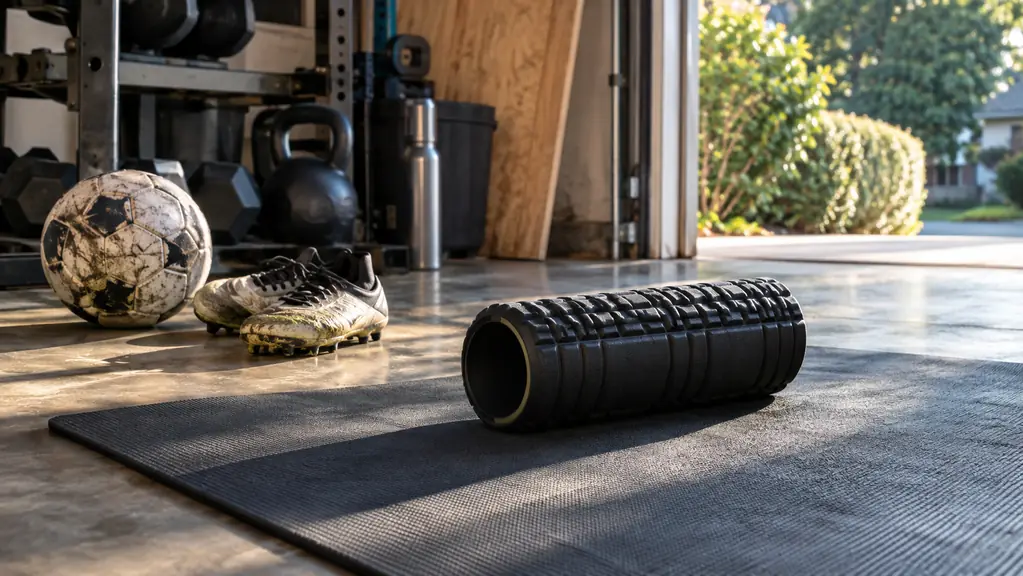
Short answer: after a Sunday league game, the TRIGGERPOINT GRID does more for my legs than a smooth foam roller ever did. I play center midfield in an over-40 league on grass, and by the seventieth minute my calves and hamstrings are asking for real pressure. The GRID is extra firm and the surface is a grid of ridges and nodules, so I can lean into one specific spot without putting my whole body weight on the leg and hoping for the best. A smooth roller is not a bad tool. It is a gentler tool. If you are brand new to rolling, or you just want five easy minutes after a midweek pickup game, the smooth one is easier to live with. That is the short version. The long version is about three years of owning the GRID and several years before that of owning a smooth roller that slowly went flat in the middle.
I am not a physical therapist and I am not going to write this like a rehab plan. I am 48, I work as an HVAC service technician, and I play twice a week: an 11-a-side Sunday morning game on grass at a city park, and a Wednesday night 7-a-side pickup game on artificial turf. My right ankle was badly sprained about six years ago and I did the physical therapy and came back from it, so I am careful with that ankle and I warm up properly now. My hamstrings and calves are what get tight. I bought the 13 inch GRID about three years ago, after the smooth roller I had used for years started to give way. That thing served me well for a long time and then it stopped being useful. When it went soft, I could feel the concrete through it. Rolling on it was mostly a performance. That was the end of that.
| TRIGGERPOINT GRID 1.0 | Smooth foam roller | |
|---|---|---|
| Surface | Multi-density grid of ridges and nodules, so pressure changes as you roll | One flat, even surface with the same pressure everywhere |
| Firmness | Extra firm, holds its shape under a grown adult's body weight | Softens over time and compresses where you use it most |
| Durability | Three years of weekly use, no soft spots, no crumbling edges | Mine went flat in about a year of weekly use |
| Comfort on day one | The ridges take a few sessions to get used to, especially on the outside of the leg | Gentle and forgiving from the very first roll |
| Coverage | 13 inches, so you work one area at a time | Longer body covers more of the back or both legs in one pass |
| Learning curve | Took me a couple of weeks to find the useful spots | Nothing to learn, lie on it and roll |
| Portability | 13 inch size drops into the side of my gear bag | Takes up real space in a bag or a truck cab |
| Best for | Regular rollers chasing firm pressure on specific tight spots | A light overall roll when nothing is badly tight |
Where the TRIGGERPOINT GRID Wins
The first difference is that it has not changed. My old smooth roller started out firm enough and then, over about a year of weekly use, it softened right where I rolled the most. That is what foam does under a grown adult's body weight, week after week, especially in a garage. The GRID is still the same shape and the same density three years in. It is listed as extra firm and it earns that word. I have never found a soft spot in it, and mine has spent three summers in a San Antonio garage, which is not a kind place for anything made of foam.
The second difference is the surface, and this matters more than I expected it to. A smooth roller spreads your weight across one even face. If you want more pressure on a tight spot, you push down harder with your body, and the moment you do that the whole leg tenses against the roller. That is the opposite of what I am after. The ridges and nodules give me somewhere to concentrate the pressure, so I can work a spot in my calf with less total weight and stay loose while I do it. On a Monday morning before a work day, that difference is the whole reason I keep the thing.
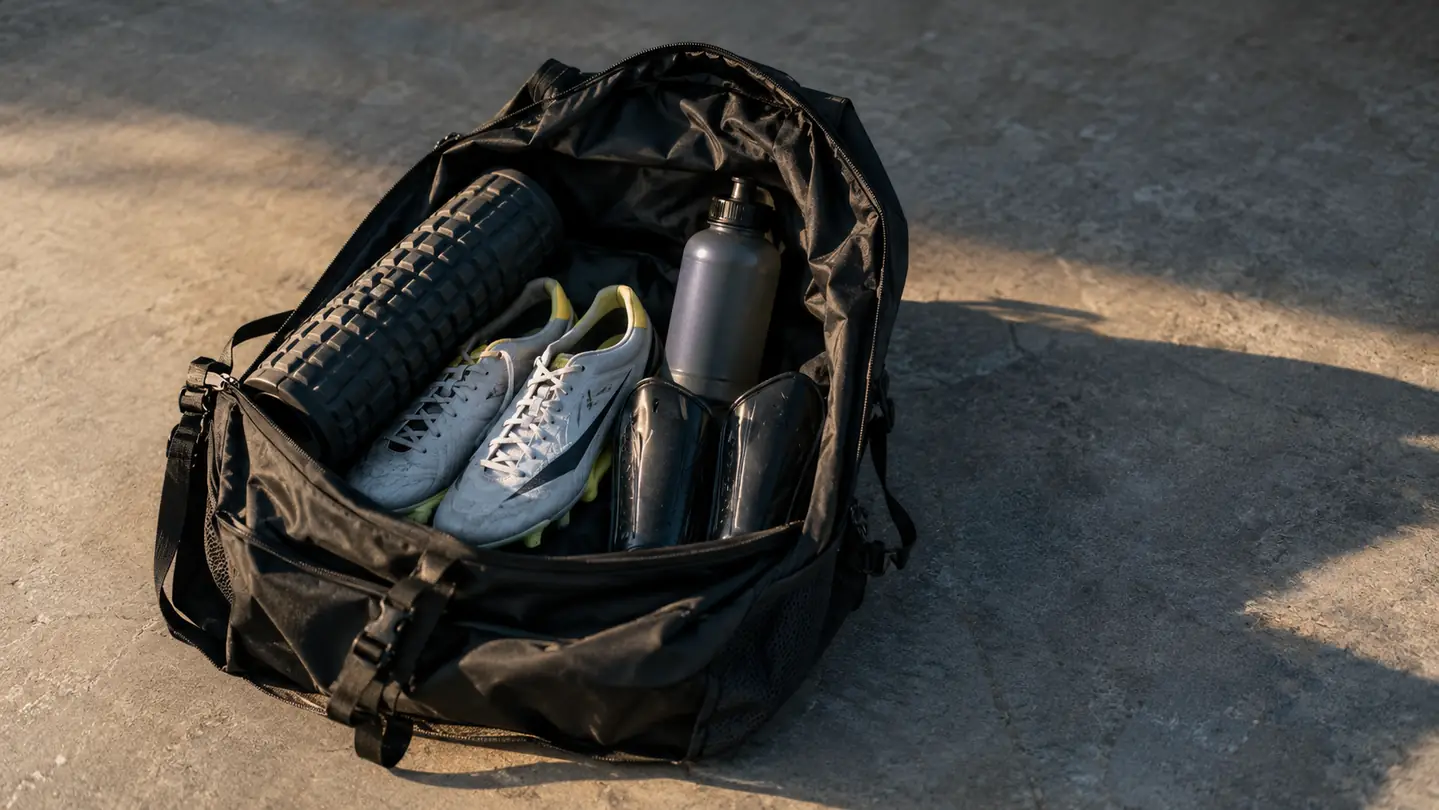
The third is size and weight. Thirteen inches is long enough to roll a calf or a hamstring properly and short enough to sit in the side pocket of my gear bag when I want it after an away game. It weighs about a pound, so bringing it is not a decision I have to think about. The smooth roller I had was longer and I never once put it in a bag.
Where the Smooth Roller Wins
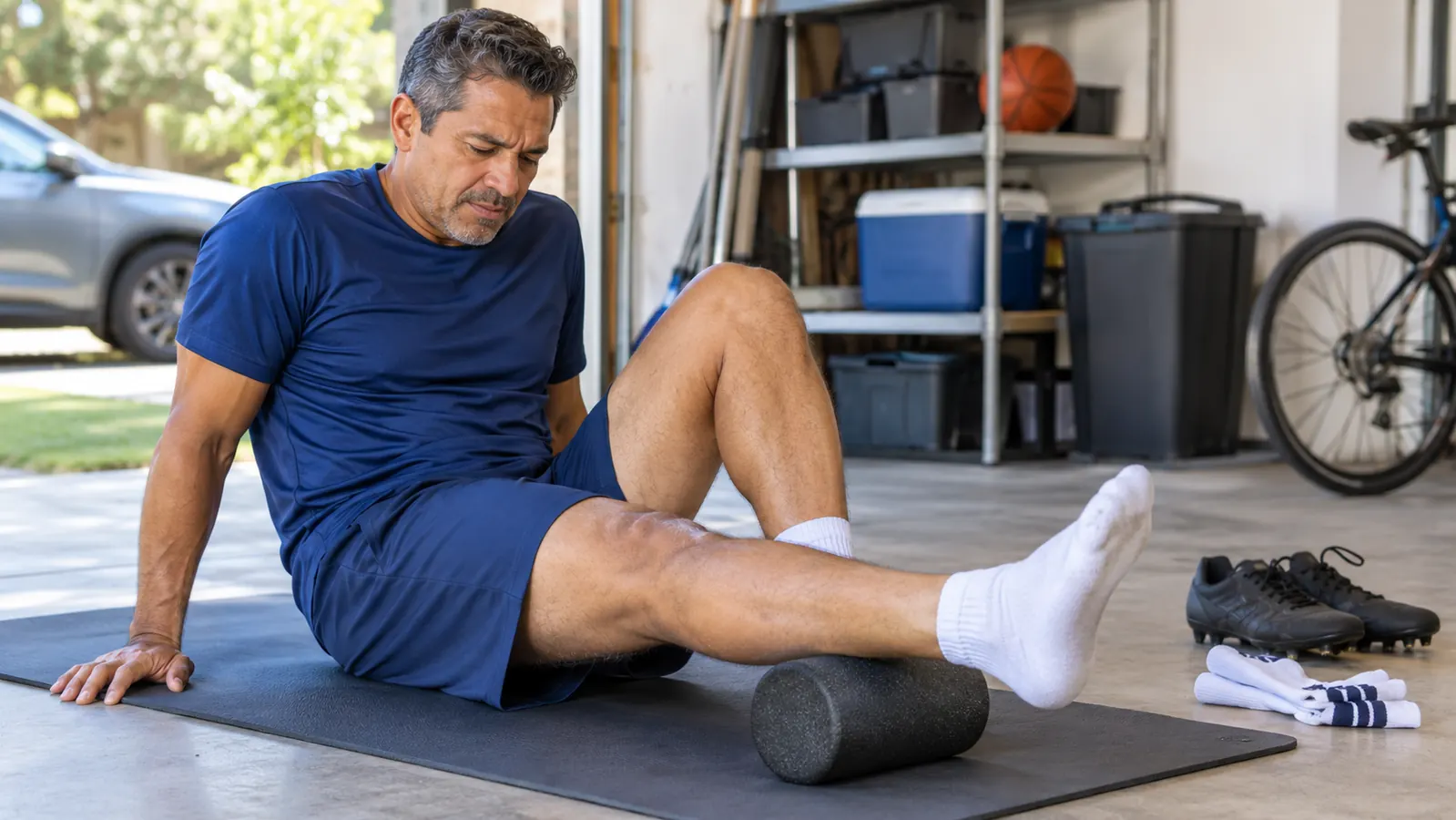
The smooth roller is gentler, and there is a real place for that. When I was coming back from the ankle sprain, before I bought the GRID, the smooth one was what I could actually tolerate on a stiff calf. A ridged surface would have been too much for me at that point, and I would have quit on rolling altogether rather than fight it. If you are new to this, or if you are coming back from something and everything feels fragile, a plain smooth roller lets you start at a low, even pressure and stay there. That is not a small thing. A tool you can tolerate beats a better tool you avoid.
It also covers more ground at once. A longer smooth roller lets you lie on your back and get both hamstrings or the length of your back in one pass, and there is nothing to figure out. My GRID took a couple of weeks to learn. The first few sessions, the ridges just felt like kneeling on a toy and I was not sure I had bought the right thing. The smooth roller has no learning curve at all. You lie on it, you roll, you get up. For someone who is only going to use it for five minutes after a Wednesday pickup game, that simplicity is worth more than the extra grip the GRID gives me.
The roller that still feels the same three years later
The GRID 1.0 is 13 inches of extra firm foam with a multi-density grid surface. It is the replacement I bought when my smooth roller went flat, and I have not gone looking for anything else since.
Amazon Check Today's Price on Amazon →How I Use It After a Sunday Game
My routine is not complicated and it is not long. I get home from the park, drop the gear bag by the garage door, and roll for about ten minutes on the yoga mat in the corner. Calves first, because that is where I feel it after a grass field, then hamstrings, then quads, then a short pass on the outside of each leg. I hold on the spots that feel tight and breathe out instead of bracing. Then I stop. Ten minutes is enough for me and it is short enough that I will actually do it on a Monday morning before I load the truck for work.
The Wednesday night game on turf is a different animal. Turf seems to leave my calves tighter than grass does, which is why I started wearing calf sleeves for those games in the first place. On Wednesday nights I roll for maybe five minutes and that is it. Anything longer and I am just lying on the garage floor avoiding my own dinner while Marisol asks me twice whether I am coming inside.
The honest part is that the GRID does not do anything magical. It does not fix a bad warm-up and it does not turn a 48 year old body into a 28 year old body. What it does is let me get into a tight calf with enough pressure to feel like I am doing something useful, without the whole leg fighting me. That is why I keep reaching for it and why the smooth roller ended up in the giveaway pile. It is a tool that makes the ten minutes easier to finish, and finishing is the part I used to struggle with.
Three years of weekly use and there is still no soft spot in the middle of it. That is the entire reason I stopped looking for something else.
What Three Years in a San Antonio Garage Did to It
Heat was the thing I worried about. A garage in south Texas is not a kind place for foam between June and September, and my old roller lived through a few of those summers before it gave out. The GRID has been through three. The surface still has all of its ridges, the foam has not crumbled at the edges, and it does not hold a smell the way I expected a foam product sitting on a garage floor to. I wipe it down with a damp cloth every few weeks and otherwise leave it alone.
The only wear I can point to is cosmetic. There are a couple of scuff marks where it leans against the wall, and the edges have picked up garage dust that does not come off completely. Nothing that changes how it rolls. For something that lives on the floor next to a yoga mat and gets stepped over constantly, that is better than I expected. My son Gabe borrows it after high school practice sometimes and he has not managed to damage it either, which for a 16 year old is a compliment.
What I'd Tell a Teammate Standing in the Parking Lot
If your current roller has gone soft in the middle, stop rolling on it. That is the first thing I say. A roller that has lost its density is not giving you the pressure you think it is, and you are mostly lying on the floor with extra steps. Mine went flat in about a year of weekly use. The GRID has not, and that is the simplest argument I can make for it. You are not buying a fancier shape. You are buying foam that does not collapse under you.
If you have never rolled before, borrow something first or start with a smooth roller and find out whether you actually keep the habit. Plenty of guys on my team own a roller that lives in a closet behind a bag of old balls. The best roller is the one you will use twice a week, and for some people that is the soft one that feels like nothing on the first day.
And if something hurts in a way that does not settle down after a day or two, go see a doctor or a physical therapist. I am a guy with a garage, a foam roller and a bad ankle, not a clinician. Rolling helps me feel looser after a game and helps me stay consistent with playing twice a week. It is not treatment, and I would not want anyone reading this to treat it like one.
Who Should Buy Which
Buy the TRIGGERPOINT GRID if you roll regularly and you want firm. If you are the kind of person who will spend ten minutes on the garage floor twice a week, the extra density and the ridged surface are worth the two week adjustment period. It is also the one I would pick if you are replacing a roller that has already gone soft, because the whole point is that this one does not. If you play twice a week and your legs are the thing that reminds you how old you are, this is the tool I would hand you.
Buy a smooth foam roller if you are brand new to rolling, if you are coming back from something and need gentle even pressure, or if you want to lie on your back and cover a lot of area without thinking about it. It is the easier tool and there is nothing wrong with easier. I would just buy a firm one, expect it to soften over a year or so, and plan to replace it. That is what happened to mine, and I would rather tell you that up front than have you find out in the middle of a season.
If your roller has already gone flat, replace it with one that has not
13 inches, extra firm, multi-density grid. Three years of weekly use in my garage and it still rolls the way it did the day it arrived.
Amazon Check Today's Price on Amazon →