
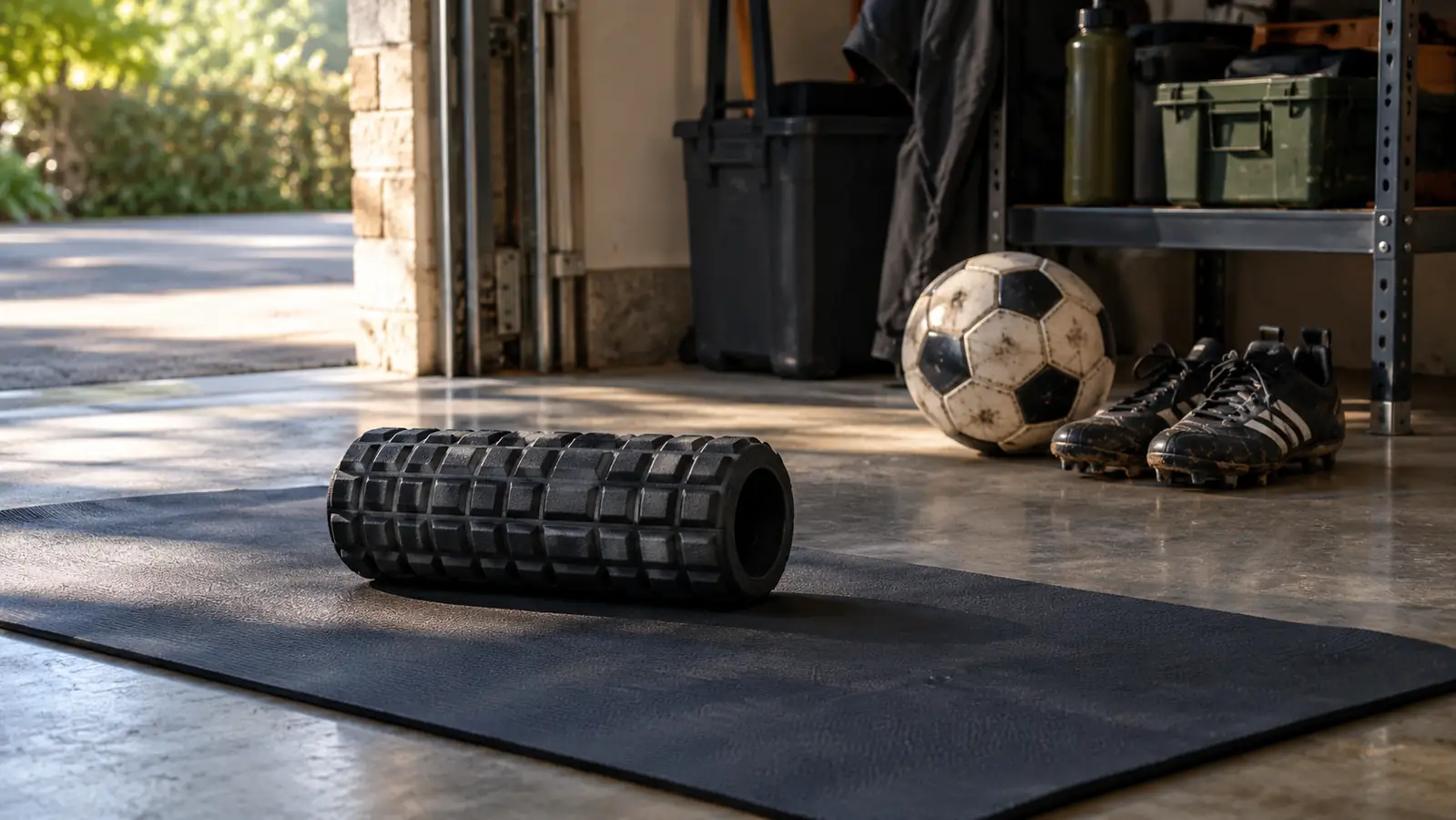
Every Monday morning I get out of the truck and my calves file the report on Sunday's game. Not my knees. Not my lower back. The calves, both of them, tight enough that the first walk across the driveway is a shuffle instead of a stride. I am 48, I work as an HVAC service technician here in San Antonio, and I play center midfield in an over-40 Sunday league on grass and a 7-a-side pickup game on turf on Wednesday nights. Twenty years of adult league and the Monday report has not changed much.
For years I ignored it. Then I bought the cheapest smooth foam roller I could find, used it for a season, and watched it go soft and flat in the middle until rolling felt like wrestling a pool noodle. About three years ago I replaced it with the TRIGGERPOINT GRID 1.0, the 13 inch multi-density version. It lives in the corner of my garage next to a yoga mat, it has been through well over a hundred sessions since, and it has outlasted two pairs of cleats. What follows is what three years of actual use looks like, written for the guy who plans to still be playing at 50.
The Quick Verdict
Three years in, the foam has not gone soft in the middle and the surface still bites into a tight calf. It hurts for the first two weeks. That is the tradeoff, and for me it has been worth it.
Amazon Check Today's Price →The Foam Roller That Outlasted Two Pairs of Cleats
Thirteen inches, extra firm, and still the same shape it was three years ago. It is the one piece of recovery gear I have not had to replace.
Amazon Check Today's Price on Amazon →How I've Used It
The roller sits on the garage floor next to a yoga mat, because bare concrete is too much for me. After a Sunday game I come home, get out of the cleats, and spend about ten minutes on it before I shower. Calves first, because they are the loudest, then hamstrings, then quads, and I finish with a short pass on each side of the IT band. Monday morning I do five more minutes on the calves while the truck warms up. That is the whole routine. No protocol, no timing app, no plan.
I bought it because the smooth one died, not because I had researched rollers for a month. What sold me was the surface. My old roller was one density, and once it softened in the middle it was useless. This one is extra firm, and the shape of the surface does work that my hands used to do. If you have ever sat on the floor pressing your own thumbs into a calf and given up after thirty seconds because your arms got tired, you already understand the appeal.
The first thing I noticed in year one was that I stopped noticing my calves on Tuesday. In year three I notice the same thing, which is the more useful data point. The second thing I noticed is that I roll differently than I did with the smooth roller. With a flat surface you get one pressure, and if you want more you have to press down with your hands and shoulders. On the grid you shift your body weight. Sit heavier on the leg and the ridges dig in. Ease off and it is closer to a warm-up. The clearest test came on a Sunday last October, a cool morning on a wet grass field. I played about 80 minutes, came home, rolled for ten, and Monday I loaded the truck without thinking about my legs. Two weeks earlier I had skipped the roller after a similar game and spent Monday morning stretching in the cab between service calls. Same legs, same kind of game, different Monday.
I have also used it after Wednesday turf nights, mostly because artificial turf leaves my calves feeling like they were packed with sand. And I used it in the back of the truck once, after a long tournament day with my son Gabe, which is not a recommendation but does tell you it weighs about a pound and travels fine in a gear bag.
What the Grid Surface Actually Does
The GRID is not a flat tube of foam with a pattern printed on it. The surface is three-dimensional, with ridges and nodules of varying density, and TRIGGERPOINT calls those Distrodensity Zones. What that means in practice is that the roller has a softer outer layer over firmer zones, so a calf sits on the softer ridges at first and sinks into the harder ones as you add weight. Different parts of a leg meet different densities without you doing anything about it.
That matters most on the calves and the quads, which are shaped differently and carry different tension. On a smooth roller both feel the same, which is why a smooth roller tends to feel either too gentle or like a rock depending on the day. On the grid, my left calf, which is the tighter one, gets a firmer ride than the right without me adjusting anything. That took a week to trust. I had spent years rolling both calves with identical weight and speed and wondering why one felt fine and the other felt like a knotted rope. With the grid I stopped managing it by hand. The tighter leg sinks further into the firmer zones and gets more work on its own, and I just roll.
The ridges are the part people either love or hate. On a tight calf they feel like knuckles working across the muscle, which is exactly why the first two weeks are unpleasant. On a looser day, the same ridges feel like a normal massage. That change is the roller telling you something about the leg, not the roller changing.
The listing calls the firmness extra firm and that is accurate. The material is foam, it weighs a little over a pound, and it is 13 inches long. It is not a vibration roller. There is no motor, no heat, nothing to charge and nothing to break. It is a hard foam cylinder with a shaped surface, and it will still be a hard foam cylinder in five years.
Three Years In: What Held Up
The TRIGGERPOINT foam has not gone soft. That sounds like a low bar until you remember that my last roller failed exactly that way. The GRID has kept its shape through three summers in a garage that hits 100 degrees, through being dropped on concrete, and through being leaned against a wall under a bag. The surface has some scuffs and the grooves collect garage dust, which I wipe out with a damp rag every couple of weeks. The worst thing that happened to it was a July when the garage sat at 104 for two weeks and the roller stayed leaned against the wall under my bag the whole time. It came out the same shape. A neighbor keeps a cheap roller in his carport and his went oval after one summer.
The only real wear is cosmetic. There is no cracking, no flat spot where my calves sit, and no soft middle. I cannot say it feels new, because it does not, but it feels like the same tool that went into the garage three years ago. For a piece of foam, that is a good run.
If I could go back and change one thing, I would have started slower. I treated the first session like a contest and my calves were sore for two days, not from soccer, from the roller. Ten minutes at moderate weight, that is the way in. The other thing I would change is where I keep it. It spent the first month in the bag in the truck, which meant it was never where I needed it. Now it lives on the garage floor and it gets used.
The Tradeoffs Nobody Mentions
It hurts. Not in a dangerous way, in a this is uncomfortable way. The first two weeks with an extra firm grid roller, my calves objected loudly and I questioned the purchase. What worked for me was starting with less body weight, rolling slowly, and keeping it on the yoga mat instead of the concrete. Go straight to full weight on a hard floor on day one and you will decide the roller is too much, and it might be, for a while.
The 13 inch length means one leg at a time. Both legs on the roller is not happening, and if that is what you want, buy a longer one. There is also a limit to what a roller does. It helps me feel looser and it helps me stay consistent, and that is the whole claim I will make. It does not fix anything. My right ankle is the reason I wear a lace-up brace, and no amount of rolling changes that. If something actually hurts, that is a doctor or a physical therapist conversation, not a foam roller conversation.
The other thing worth saying plainly is that this is a tool for tightness, not for damage. I rolled my right ankle badly about six years ago, did the rehab with a physical therapist, and I wear a brace on that ankle every game. Rolling the calf above it helps me feel looser going into a game. It did not rehab the ankle and it was never going to. Anyone selling a foam roller as injury protection is selling you something else.
One more thing: the surface grabs. On a smooth roller I used to slide across the garage floor. The grid pattern grips the mat and stays where you put it, which is good, but it also means it picks up whatever is on the floor. Keep it off the grit.
My Actual Routine After a Sunday Game
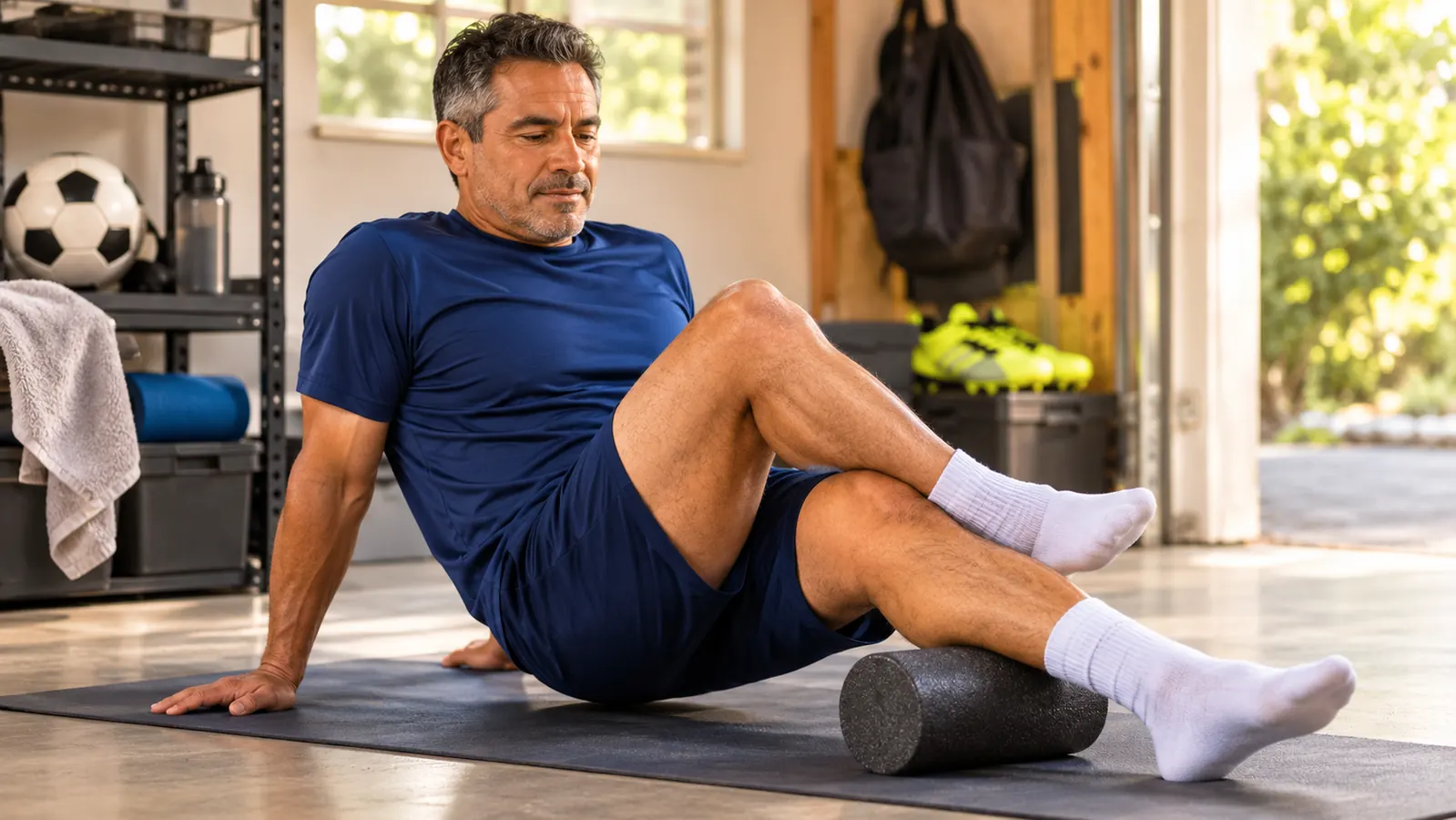
Calves first. I sit with both legs out, put the roller under one calf, cross the other leg on top for weight, and roll slowly from just above the ankle to just below the knee. Sixty to ninety seconds each side. Then hamstrings, sitting with the roller under one thigh and the other foot flat on the floor. Then quads, face down with the roller under the front of one thigh and my forearms on the mat. Then a short, light pass on each side of the IT band, which is the one spot I do not push, because pushing it has never helped me.
Ten minutes total on a good night, five on a bad one. Monday morning it is calves only, before I load the truck for the first service call. That is it. The reason I have kept the routine for three years is not discipline. It is that the difference between a Monday shuffle and a Monday stride is obvious enough that skipping it feels stupid. It got tested in September, when I played Sunday league and Wednesday pickup in the same week and my calves were complaining by Friday night. I rolled ten minutes, calves only, on the garage floor, and it was enough to get me to Sunday without dreading it. That is the honest version of what this does. Not a fix, just something that keeps me from going into the next game stiff.
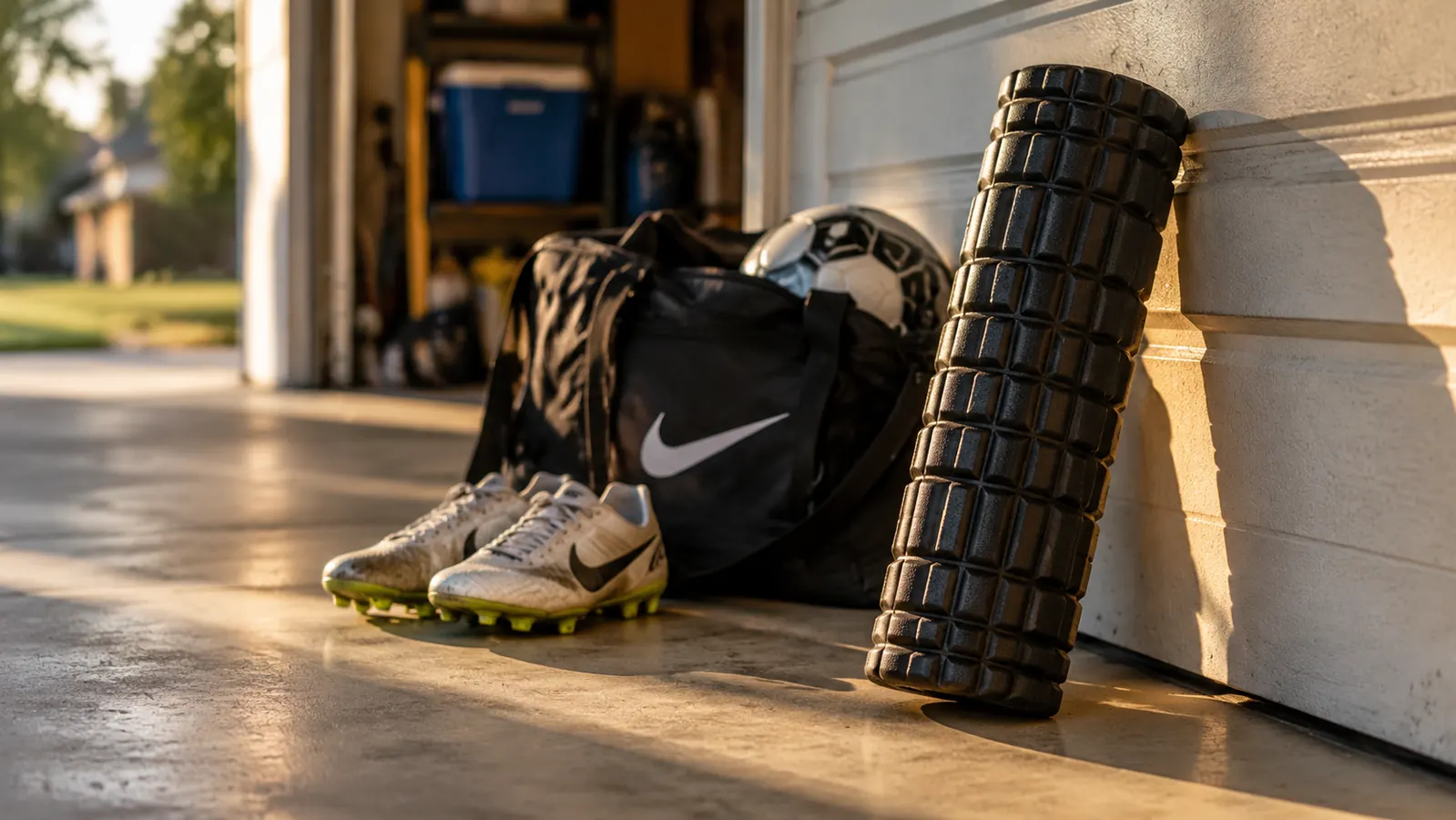
I keep the roller a few feet from where I take my cleats off, because a routine only survives if it is easy. If I had to walk to the other side of the house for it, I would skip it on the nights I am tired, and those are the nights it matters most. Nothing about this is complicated, and that is why it stuck.
What I Liked
- Foam has stayed firm after three years of weekly use
- Multi-density surface lets me change pressure by shifting body weight instead of pressing with my arms
- 13 inch length fits in a gear bag and weighs about a pound
- Grips the mat instead of sliding across the garage floor
- Nothing to charge, nothing to break, nothing to maintain
Where It Falls Short
- Extra firm, and the first two weeks are genuinely uncomfortable
- 13 inches means one leg at a time
- The grooves collect garage dust
- Does not replace hands, a physical therapist, or an actual diagnosis
The foam has not gone soft in the middle after three years of weekly use. That was the exact reason the last one ended up in the trash.
Who This Is For
Adult recreational players, mostly. If you are the guy who plays Sunday morning, drives home, sits on the couch, and then wonders on Tuesday why your calves feel like they belong to someone else, this is the tool I would hand you. It suits players who want one durable thing instead of four gadgets, and who are willing to spend ten honest minutes on the garage floor. Over-40 league guys, pickup players on turf, anyone who has already worn out a cheap smooth roller. It also suits the parent who wants one roller in the garage that a teenager can use too, which is how it works in my house.
Who Should Skip It
If you want a soft, gentle roller to lie on while you watch television, skip it. Extra firm means extra firm. If you have something that actually hurts, skip the roller and get it looked at first, because rolling a real problem is a good way to make it worse. If you want both legs at once, get a longer roller. And if you are buying it as motivation to start a recovery habit you have never had, be honest with yourself. The roller does not do anything while it sits in the corner. I know, because mine sat there for a month in the beginning.
Ten Minutes on Monday, Three Years and Counting
Same roller, same routine, still firm. If your Monday morning walk across the driveway is a shuffle, start here.
Amazon Check Today's Price on Amazon →