

Twenty minutes into a Sunday game last October, a midfielder half my age swung a cleat through my standing leg. It caught me just above the ankle, right along the bottom edge of the shin guard. I felt the thump, hopped twice, and kept playing. That is most of what I want to say about the Franklin Sports Superlight shin guards, and I will spend the rest of this explaining the parts that are not that simple.
I am 48, I play center midfield in an over-40 league on grass every Sunday morning, and I play seven-a-side on artificial turf on Wednesday nights. I have been wearing this Franklin Sports pair for about two years, and this review covers the season I just finished, roughly thirty games across the two formats. They live in the black backpack-style bag that rides around in my work truck all week, which is not a kind environment for anything with foam in it. Here is what held up, what did not, and who I would hand them to.
The Quick Verdict
Light enough that I forget I have them on, and the shield takes a knock without leaving me sore the next morning. The straps are the part that wears first, and the size chart on this listing is aimed at kids, so measure before you order.
Amazon Check Today's Price →The pair that has stayed in my bag for two seasons
Franklin Sports Superlight shin guards: high density abrasion resistant shield, foam backing, two adjustable self-stick straps, 0.14 kg for the pair. Check the size chart first, then check today's price.
Amazon Check Today's Price on Amazon →How I've Used It
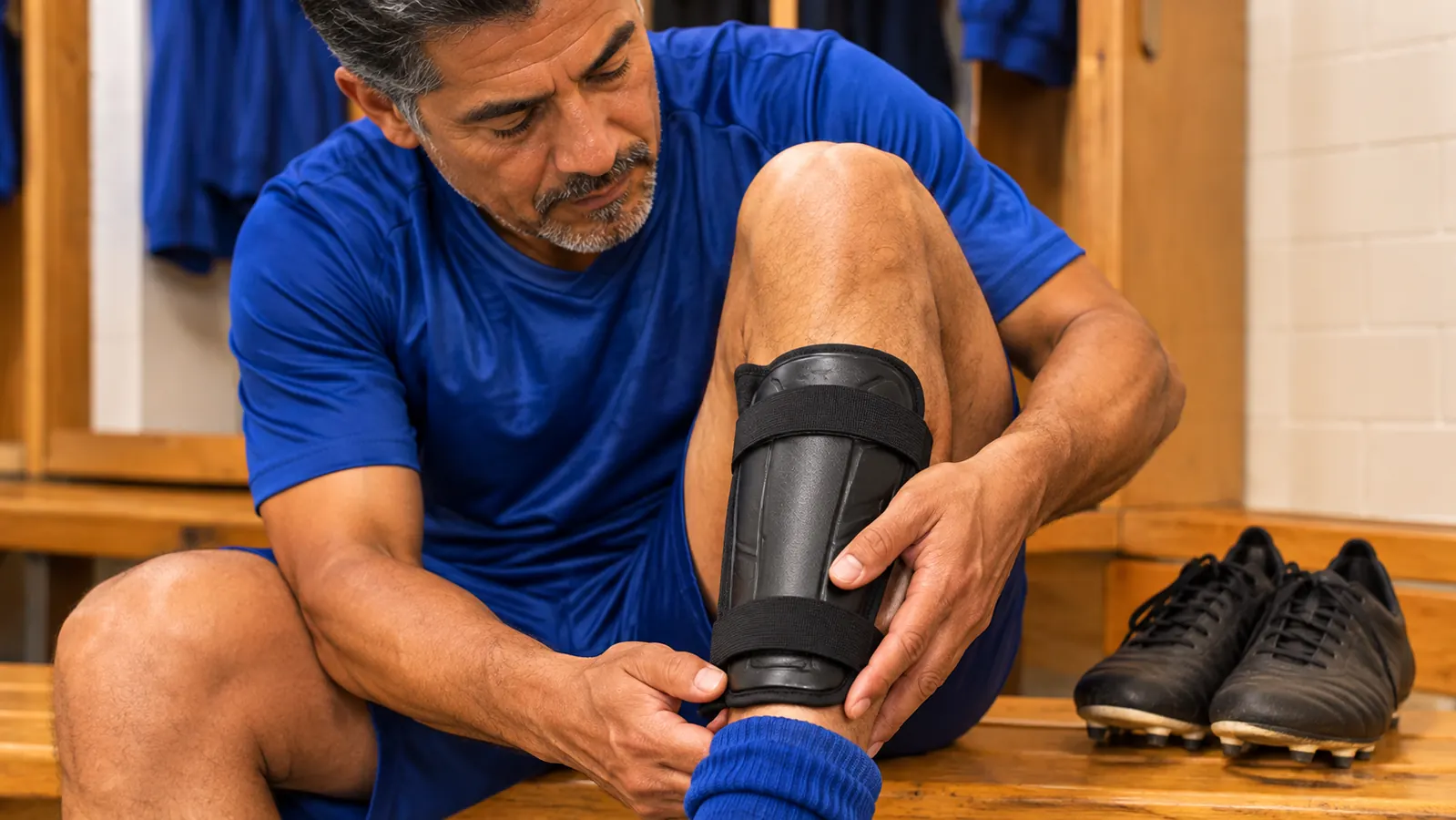
Mine go under my team socks, which is how most adult league players wear a slip-in guard. The two self-stick straps go around the calf first, then the sock pulls over the top. If you skip the straps and just shove the shield down a sock, it works its way down your shin by the second half. Mine has not moved once in two years when I strap it properly.
A normal week is ninety minutes on grass Sunday, an hour of seven-a-side on turf Wednesday, plus warm-up before both. Then they sit in a truck cab in South Texas heat from Monday to Friday. That cycle, sweat then bake then sweat again, is what kills foam-backed gear faster than actual contact does. Anyone who tells you a shin guard wears out from kicks alone has not left a bag in a vehicle in August. The worst stretch was last July, when the bag stayed in the cab through a full week of service calls, windows up, and the dash reading 118 by two in the afternoon. When I pulled the guards out on Saturday they were warm to the touch and the foam had gone tacky. They settled back to normal overnight in the garage, and since then the bag comes inside on Friday nights instead of staying buckled in the truck all weekend.
I also want to be clear about what these do and do not do. The shield sits over the front of the shin and takes the contact when a cleat comes through. That is the job, and it does that job. They do nothing for your knees, your ankles or your feet, and if something actually hurts, that is a conversation with a doctor or a physical therapist rather than a piece of foam. My right ankle has a lace-up brace in it for every game, and that is a different piece of equipment doing a different job.
One more thing about how they sit. I wear them under the sock, not over it. Some players strap a guard over the sock because it is faster to get on and off, and that works, but the top edge catches the sock band and the straps end up rubbing against bare skin on the calf. Under the sock is quieter, and once the straps are set you do not touch them again until you take your boots off.
What the Franklin Sports Superlight Actually Is
It is a foam-backed shield with a high density abrasion resistant face, symmetrical so either one fits either leg, held on by two adjustable self-stick straps. The listing gives the pair at 0.14 kg and 11 inches long by 5 inches wide, which is why they feel like nothing in the bag. There is a chrome accent along the shield edge. That is cosmetic, but it is also the only part of the guard anybody sees if you wear them over the sock.
The weight is the thing I notice most. The pair I wore before this was a hard-shell guard that weighed noticeably more and sat further off the leg. I bought that pair when Gabe was still in middle school and wore it for the better part of five seasons. It cracked across the middle of the shield during a game in the fall of my second year in this league, right about where a defender's stud had landed a few weeks earlier. I finished that half with the two halves held together by the sock and ordered something lighter that night, which is how I ended up here. The Franklin Sports guards sit close and low. On a hot morning in August that difference is real, and it is why these became the pair I reach for by default instead of the pair I keep as backup.
The foam backing is where the comfort comes from. It is the layer against your skin, and it is what stops the shield from digging into the shin bone when somebody stands on you in a pile-up. It is also the layer that eventually gives up. More on that below.
For what it is worth, the listing sits at a 4.5 average across more than 5,700 ratings. I do not put much weight on that number either way, but it does mean you are not the first person trying a pair.
Two Seasons Under a Sock: What Held Up
The shield itself is fine. Two years of Sunday games and most Wednesday nights, and there is no crack, no separation, no soft spot in the middle when I press my thumb into it. My previous pair cracked straight across the shield after a few seasons, which is what sent me looking in the first place. This one has not done that.
The straps are the part that ages. Self-stick closures pick up lint, grass and whatever else is loose in a gear bag, and after a couple of seasons the hook side holds less firmly than it did when the pair was new. Mine still close, but I have to press them down properly now instead of just laying them together. I had one let go on a Wednesday night in March, on the turf, early in the second half. Not fall off, just lose enough grip that the guard rotated a quarter inch and I felt it on the next stride. I stopped, pressed it back down, and it held for the rest of the hour. That has happened maybe three times in two years. Annoying, not a failure, and it is the one thing I would change about the design if somebody asked me.
The foam has compressed a little along the top edge where the sock band sits over it. Not enough to change how a normal challenge feels, but you can see the flattening if you look for it. Two years is a fair run for a piece of foam that gets soaked twice a week through a Texas summer.
On care, I do almost nothing. They come out of the sock, get wiped with a damp cloth if they are gritty, and go back in the bag. I have never put them in a machine and I would not, because the strap adhesive is the first thing to go and hot water is not going to help it. Air dry, out of the sun, is the whole routine.
What I have not tested is a full-speed follow-through from a defender clearing the ball. I have taken cleats, a close-range ball and one accidental knee, and none of it got through. I am not going to claim I know how the shield handles a full swing, because I do not.
Sizing Is the Thing to Get Right
The Medium on this listing is marked up to 5 feet 3 inches and ages 6 to 12. That is a kid's measurement sitting on a page that also serves adults, which is exactly how people end up ordering wrong. Read the chart, measure the length of your shin from the top of the ankle to just below the knee, and buy to that number rather than to the word Medium.
My general rule: a shin guard that is too small is worse than a cheap one that fits, because it slides into the wrong spot and you spend the whole game hitching at your sock. If you land between two sizes, go up.
I keep a cloth tape in the garage for exactly this, next to the foam roller. Top of the ankle bone to just below the kneecap on my left leg measures a hair over 10 inches, and the 11 inch length on this listing sits right on me. Gabe measured about 10 and a half at 14 and has passed that since, which is why his second pair came off the same chart. If you are ordering for a teenager, measure in August before the season starts, not in May, because a summer of growing changes the number.
Measure a kid every season, not once. My son Gabe is 16 and plays varsity, and he has been through more pairs of guards than I have, not because they broke but because he outgrew them. I bought him his own pair of these about a year ago and they are still going.
On Grass, on Turf, and Under a Sock
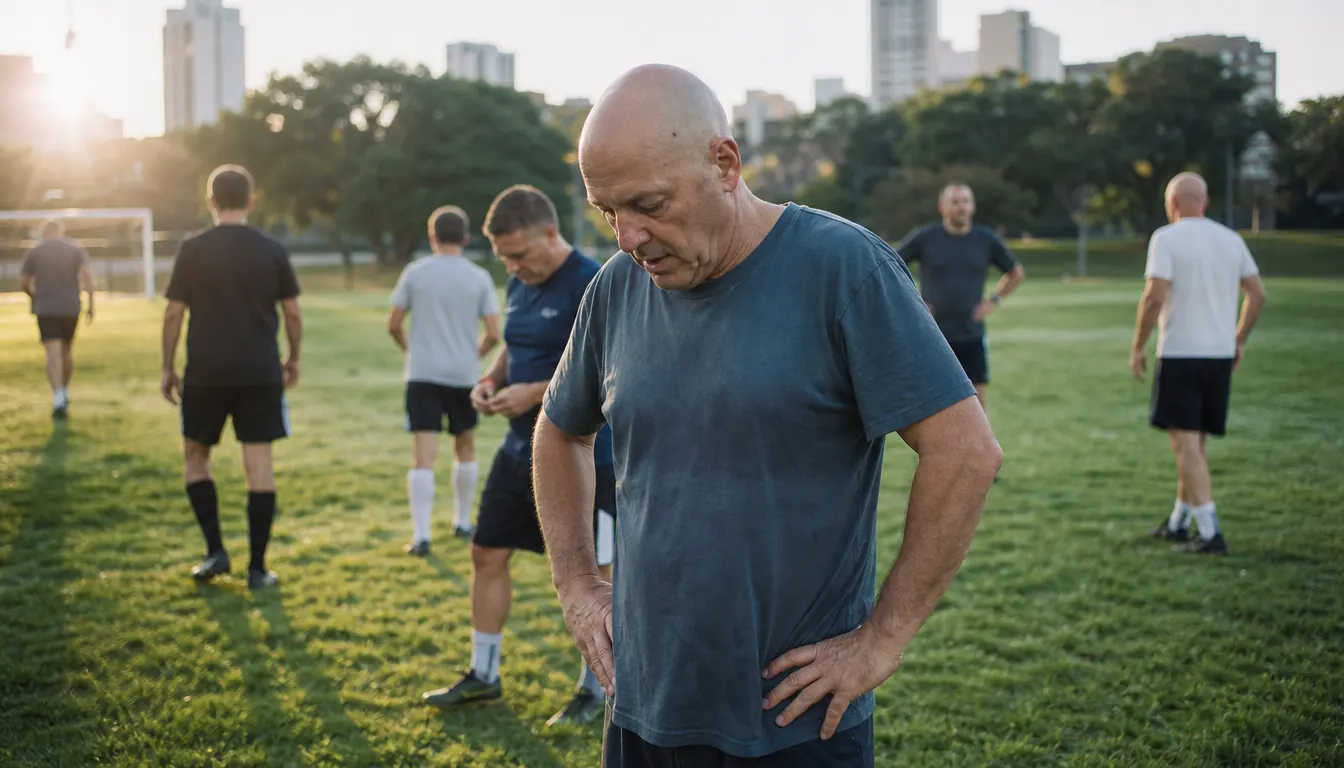
Grass is where these make the most sense to me. The surface is slower, contact is more common, and the guard sits still because you are not stopping and turning as sharply. Sunday morning on a city park field is exactly the use these were built for.
Turf is where the straps earn their keep. Wednesday night is faster, there is more pivoting, and a loose guard wants to rotate around the shin. With the top strap set a little tighter than feels natural at first, mine stayed square through a full hour.
The sock matters more than people think. A tight team sock holds everything in place, a loose one lets the whole assembly shift. If your guards keep sliding and the straps are set right, check the sock before you blame the guard. I found that out in a rain game in November, when wet socks stretched and the whole setup started moving on me. By the second half I was pulling at my sock between every stoppage. Same guards, same straps, different socks, completely different game.
What I Liked
- Light enough to forget about: 0.14 kg for the pair, 11 by 5 inches
- High density shield with foam backing takes a cleat without leaving me sore the next morning
- Two adjustable self-stick straps keep the shield from sliding down inside a sock
- Symmetrical, so there is no left and right to sort out in a bag at seven in the morning
- Shield has held up two years with no cracks and no soft spots
Where It Falls Short
- Self-stick straps are the first thing to wear, and they collect lint and grass
- The size chart on this listing is aimed at kids, so adults have to measure carefully
- Foam along the top edge compresses over a couple of seasons
- Not a hard-shell guard, so it will not suit you if you want maximum coverage
Thirty games a season for two seasons, and there is no crack in the shield. The strap is what ages first, not the guard.
Who This Is For
Adult recreational players who want something light under a sock and do not want to think about their shin guards again until they wear out. Sunday league, pickup, casual seven-a-side, anyone playing once or twice a week. Nothing about this pair asks you to be good at soccer. It asks you to put it on correctly.
It is also a sensible first pair for a kid moving up, because the shield is forgiving, the straps are simple enough for a 10-year-old to set on their own, and it is an easy thing to hand over before you know whether they will stick with the sport. Gabe wore his pair for a full high school season with no complaints, which from a 16-year-old is a review of its own.
And it suits the player who, like me, has a specific thing they are managing. Mine is a right ankle that I rolled badly about six years ago and rehabbed with a physical therapist. I wear a lace-up brace for every game and I keep these guards on under the sock. None of that is treatment. It is just the routine that keeps me turning up on Sunday mornings, which at my age is most of the battle.
Who Should Skip It
If you play at a level where you are taking real contact every week, or you have had a shin problem before and want a guard that covers more of the leg, this is not that guard. Look at a hard-shell design with more coverage and accept the extra weight. I wore one for years and it did its job, right up until it cracked.
If you are an adult sitting right on the edge of the size chart and you cannot be bothered to measure, skip it. You will order the wrong size, it will slide, and you will blame the product for a fitting problem.
And if you want a guard you can yank on over the sock five seconds before kickoff, this is not that either. It is a strap-then-sock routine, and it takes maybe twenty seconds. If that is twenty seconds too many on a Wednesday night, buy something else.
If your shin guards live at the bottom of the bag, these will do the job
Franklin Sports Superlight shin guards: high density shield, foam backing, two adjustable self-stick straps, 0.14 kg for the pair. Measure your shin, check the chart, then check today's price.
Amazon Check Today's Price on Amazon →