
Nobody warns you that the hard part of turning 48 is not the sprint itself. It is the ten minutes afterward, sitting on the tailgate of my truck in a city park parking lot, waiting to find out whether my right calf is going to let me drive home. I play center midfield in an over-40 Sunday league and I play 7-a-side on artificial turf on Wednesday nights. During the week I am an HVAC service technician, so I spend five days on my feet and up and down ladders before I ever lace a cleat. My calves started talking back to me around year nineteen of adult league, and they have not stopped.
That is how I ended up buying Rymora calf compression sleeves about 18 months ago. I want to be clear about what this review is and is not. It is one recreational player's experience with a piece of fabric he wears on his legs. It is not medical advice, and I am not going to tell you these sleeves prevent anything or fix anything, because I am not qualified to say that and neither is a product page. What I can tell you is what changed for me over 18 months and somewhere between 80 and 100 games, what wore out, what annoyed me, and who I think should spend the money.
The Quick Verdict
Comfortable, durable enough to survive a season and a half, and the thing I reach for before a turf night. Not a brace. And the top band rolls if you get the size wrong.
Amazon Check Today's Price →I wear them for the warm-up and for the game, and sometimes for the drive home when my calves are still buzzing. I own two pairs and rotate them through the wash. That is the entire routine. No protocol, no schedule, no chart taped to the garage wall. They go on before I stretch and come off in the parking lot or at the kitchen sink, then hang over the laundry door until Wednesday.
The pair that lives in my truck on turf nights
Two pairs, 18 months, roughly 90 games. Read the size chart before you order, because the chart is the whole ballgame with a footless sleeve.
Amazon Check Today's Price on Amazon →How I've Actually Used Them
Sunday morning is 11-a-side on grass at a city park. The game is slower and choppier than turf, more standing around and then a forty-yard chase, and my calves mostly complain in the last fifteen minutes when I am trying to hold a shape I stopped being able to hold around 2019. I put the sleeves on about 25 minutes before kickoff, after a lap and the leg swings a physical therapist gave me when I came back from rolling my right ankle badly about six years ago. Wednesday is 7-a-side on artificial turf, and that is where they do the most for me. Turf is unforgiving on calves, and mine are tight by nature.
The honest description of the benefit is that my calves feel supported while I play and less chewed up the next morning. That is it. Not faster, not bouncier, not recovered in an hour. On the nights I skip them, the drive home is more uncomfortable and Monday is stiffer. I noticed the difference most in the second half of turf games, where I used to get a tight, hot feeling in both calves around the ten minute mark after halftime. It comes later now, or not at all. I will take a small, boring, repeatable improvement over a dramatic one every time.
Fit is the part that decides whether you like these or hate them. Measure the widest part of your calf with a tape, sitting down, and measure both legs, because they are not always the same. Do not guess from your height or your shoe size. The listing gives the fabric as 54% nylon, 39% polyester and 7% elastane, which is a lot of stretch, so a sleeve that is one size off will still slide on and will still feel fine while you are standing in your kitchen. Then you will run in it and find out. Mine sits below the knee without digging in and does not bunch at the ankle. For what it is worth, my right calf measured 16.5 inches and my left measured 16.25, and I wrote both numbers on a strip of tape on the garage wall so I would stop guessing when I ordered the second pair. That is the level of care this thing rewards. If you are between sizes, go with the smaller one if you want a firm hold and the larger one if you hate tight bands. I went with the smaller of the two and I would do it again.
What Held Up and What Did Not, 18 Months In
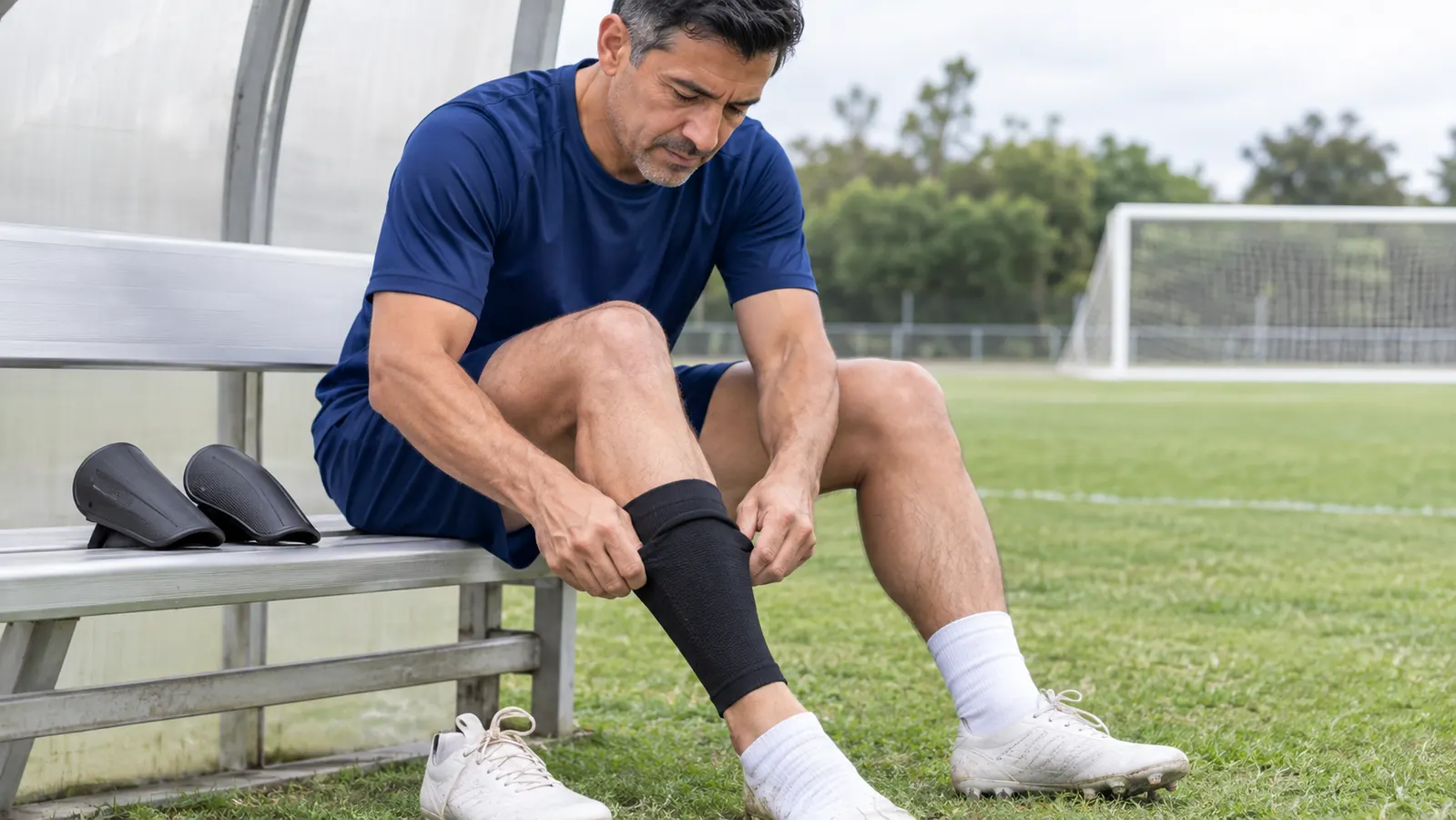
Eighteen months in, here is the state of things. The pair I wear most has visible thinning along the top band and some pilling on the inside face where it rubs the leg hair. The compression itself has not gone. It still holds shape through a full game and comes back after a wash. There is a small amount of stretch memory loss at the ankle opening on the older pair, which is the first place I would expect a footless sleeve to give out. Nothing has torn, no seam has opened up, and I have not had to replace either pair yet. I checked the seam over the right calf in the truck after a Wednesday game last month, because that is the one that gets the most use, and it looked the same as it did in month three. That is not exciting. It is what you want.
Care has been machine wash, cold, then air dry over the laundry door. I have never put them in the dryer and I would not. Heat is what kills stretch fabric. If you are the kind of person who throws everything in together on Sunday night and pulls it out hot, expect a shorter life than mine. My guess, and it is only a guess from one sample, is that a twice-a-week player gets 18 months to two years out of a pair before the top band feels loose. Someone playing three or four nights a week should plan on replacing annually. I wash mine after every game, which is probably more often than the label requires, and they have not complained.
I keep a note in my phone after each game, which sounds more organized than I am. It is three lines: which pair, how the calves felt during, and how they felt the next morning. I started because I wanted to know whether I was fooling myself. Over 18 months the pattern was boring and consistent. When I wore the sleeves on turf, the next morning was a two out of ten on the stiffness scale. When I skipped them, it was a four or a five. On grass the difference was smaller, maybe a one point gap. That is the whole data set, and it is enough for me.
Eighteen months, somewhere around 90 games, two pairs. The thinning is at the top band. The compression has not gone anywhere.
What I Liked
- Stays put through a full game once you have the size right
- Holds its compression through 18 months of twice-a-week use
- Machine washable and air dries overnight
- Makes turf nights noticeably more comfortable for my calves
- Two pairs make a wash-and-wear rotation realistic
Where It Falls Short
- The top band rolls if the size is wrong
- Leaves a light indentation behind the knee for about an hour
- Traps heat on a hot morning
- Footless design does nothing for the foot or ankle
- Sizing takes a tape measure, not a guess
The Parts Nobody Mentions
The top band is the whole story with calf sleeves and nobody tells you that before you buy. When mine was the wrong size, the band rolled down inside 20 minutes and I spent the rest of the game yanking at it. Sized correctly it stays put, but it still leaves a light indentation behind the knee that takes about an hour to fade after I take them off. If you have ever worn a tight sock and hated the line it leaves, you will notice this one. It does not bother me during the game. It bothers me in the shower. I also learned not to put them on right after I put lotion on my legs, because the band will not grip the same way and you will fight it all game. That is a small thing that cost me one Wednesday night.
Getting them on takes practice. Do not pull from the top hem. Roll the sleeve up like a thick sock, step your foot through the opening, and unroll it up the calf. Pulling from the hem stretches the band unevenly, and that is exactly how people end up with the rolling problem they then blame on the product. It took me about four wears to stop fighting mine. Now it is ten seconds a leg in the parking lot. I do it standing next to the truck with one hand on the door, which is not a technique anyone taught me, it is just where I happen to be.
Two pairs is the correct number, not one. These get soaked. If you play Wednesday and again Sunday and you own a single pair, you will be hand washing compression fabric at ten at night on a Tuesday, and you will skip it once, and then you will play without them and wonder why your calves hate you. The second pair is not a luxury purchase. It is the thing that makes the habit stick, which is the only way any of this works. I keep one pair in the soccer bag in the back of my work truck and one in the laundry rotation at home. That sounds obvious. It took me a month to figure out.
They are footless, which means they stop above the ankle and do nothing for your foot. If you have been picturing something with a stirrup under the arch, this is not that. That is the design, not a flaw, but it is worth saying plainly because I have watched teammates order calf sleeves expecting a sock and get confused when the box arrives. They also do not stay cool. On a San Antonio morning in August the sleeve traps heat, and I do not mind, and some people will. I wear them in July because the turf is worse than the heat. If you are the kind of player who complains about being hot before the game starts, you will complain about these too.
What These Sleeves Do Not Do
These are not a brace. They are a snug sleeve of stretch fabric, and they do not support your ankle, stabilize a joint, or take load off anything. My right ankle gets a lace-up brace for every game and has for six years, and the sleeve sits above that doing a completely different job. The product listing mentions shin splints in its keywords, and I am not going to make a medical claim about that or about anything else. I am a service technician who plays on weekends. If something hurts in a way that is new, sharp, or getting worse, that is a conversation with a doctor or a physical therapist, not a purchase. I have had that conversation. It is less fun than buying gear and it is worth more.
Same goes for prevention. I will not tell you these keep you from getting hurt. I wear them because my calves feel better during and after turf games, which means I warm up more calmly and I do not spend Monday walking like a man twice my age. Feeling supported and staying consistent is the entire claim. If a page tells you a piece of fabric prevents injury, close the tab and go stretch. I say that as a guy who has bought things because a page told him they would fix him. The fix was a physical therapist and a routine, and the sleeves are a small part of the routine.
What I'd Tell a Teammate
If a guy on my team asked whether to buy them, I would say measure your calf first, buy two pairs, and give it three weeks before you decide. The first wear is not the test. The test is a Wednesday night on turf when you are 60 minutes in and it is 94 degrees and you have forgotten you are wearing them. That is the review. Everything before that is just how they feel in your kitchen. I would also tell him they are not going to change his life. I am 48, I play twice a week, and I want to still be playing at 60. These help me do the twice a week part without paying for it on Monday.
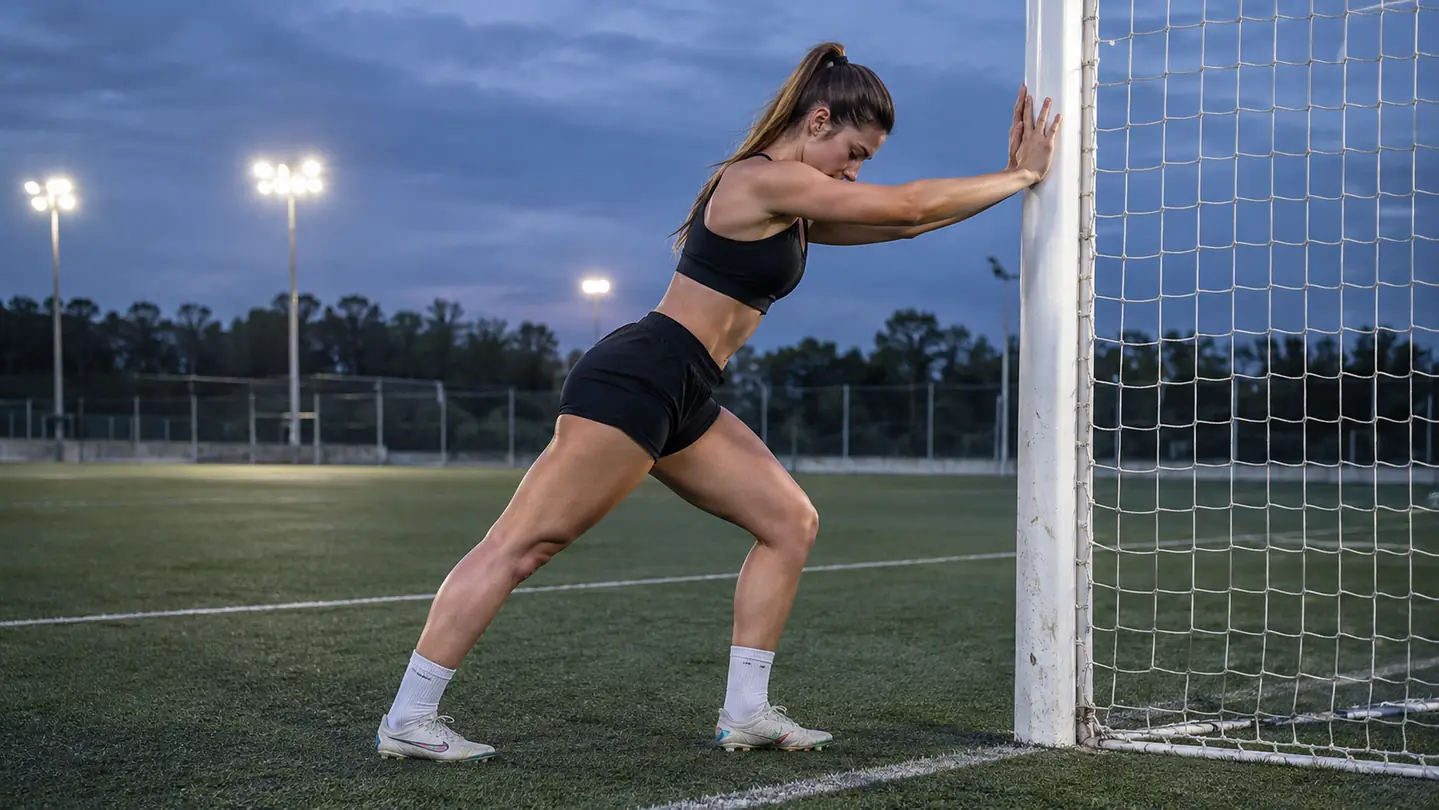
The other thing I would say is do not buy them to solve a problem you have not identified. If your calves are tight because you do not warm up, the sleeve is a bandage on a habit. I warm up now in a way I did not five years ago, and the Rymora sleeves are one part of that, along with rolling my calves on a foam roller in the garage and actually stretching after games instead of driving straight home. The sleeve is the smallest part of the routine, and it works because the rest of the routine exists. My son Gabe, who is 16 and plays varsity, borrowed a pair once and gave them back. He said they felt like a tight sock. He is 16. He is also right.
If you want the exact test I would run, here it is. Wear them for one turf night and one grass morning in the same week, and write down how your calves feel the next day. Then the following week, do the same two games without them, and write it down again. You do not need an app. A note on your phone is fine. If the difference is obvious, keep them. If you cannot tell, you saved yourself a purchase. If they rolled down, your size is wrong, not the product. I did this for a month before I bought the second pair, and the difference on turf was the reason I did.
Who This Is For
Recreational players in their thirties and up who play on turf and feel it in their calves the next day. People who are on their feet all day, on a ladder, on a concrete floor, in a truck, and want something on their legs for the last two hours of the shift. Anyone who wants to try compression without buying a clinical device or an expensive recovery system. And specifically, the Sunday league midfielder whose calves have quietly become the reason Monday is bad. If you recognize yourself in that description, this is the version of the purchase I would make again. I would buy the Rymora pair again tomorrow, and I would still measure first.
Who Should Skip It
Skip it if you have circulation problems, swelling, numbness, or a calf that is hot and painful, and go see a doctor instead. Skip it if what you actually want is ankle support, because this will not give you that and my lace-up brace is a different piece of equipment for a different job entirely. Skip it if you will not take two minutes to measure your calf, because the wrong size is a bad experience you will blame on the product. And skip it if you are looking for something that fixes a problem rather than something that helps you keep playing while you address the problem properly. That is not a knock on the sleeves. It is what they are for.
If your calves are the reason Monday is bad, start here
Measure your calf, buy two pairs, and give it three weeks including one turf night. That is the exact test I would run before I judged them.
Amazon Check Today's Price on Amazon →