
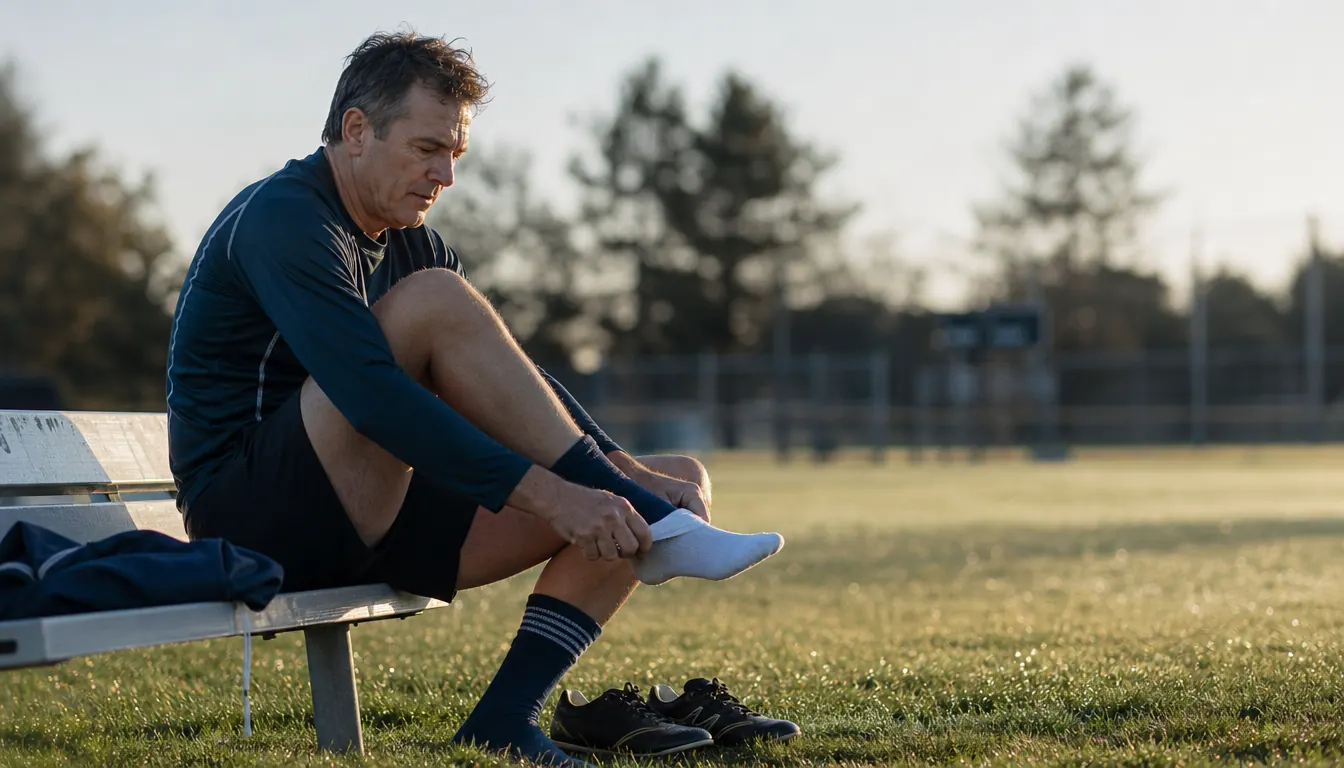
The first time my foot slid inside my cleat on the turf, I blamed the cleat. Then I blamed the weather. Then I did what most weekend players do and bought another pair of socks, which solved nothing, because they were the same cotton socks I already owned in a different package. Here is what I finally worked out about five months ago: on artificial turf, a plain sock inside a synthetic cleat has almost nothing to grab. The sock turns against the inside of the shoe. Your foot turns inside the sock. By the second half you are curling your toes just to feel planted, and your calf is doing overtime to make up for it. Yufree soccer grip socks were the last thing I tried and the only thing that worked.
I am 48, I work as an HVAC service technician in San Antonio, and I play center midfield in an over-40 Sunday league on grass and a Wednesday night 7-a-side game on turf. Twenty years of adult league. My right ankle is the one I rolled badly about six years ago, so it lives in a lace-up support, and my calves are the reason I own compression sleeves. I am not fast anymore. I am, however, very hard to knock off the ball, and a good amount of that is simply being planted. When your foot is moving inside the shoe, you are not planted, no matter how hard you are trying to be.
The Quick Verdict
Five months of Sunday grass and Wednesday turf and my foot stays put inside the cleat. The grip pads do wear. The socks do not.
Amazon Check Today's Price →If your foot turns inside the cleat, start here
Four pairs, mid-calf, pull on, machine wash. These are the ones that live in my bag now, and they were the fix that finally worked.
Amazon Check Today's Price on Amazon →How I've Used Them
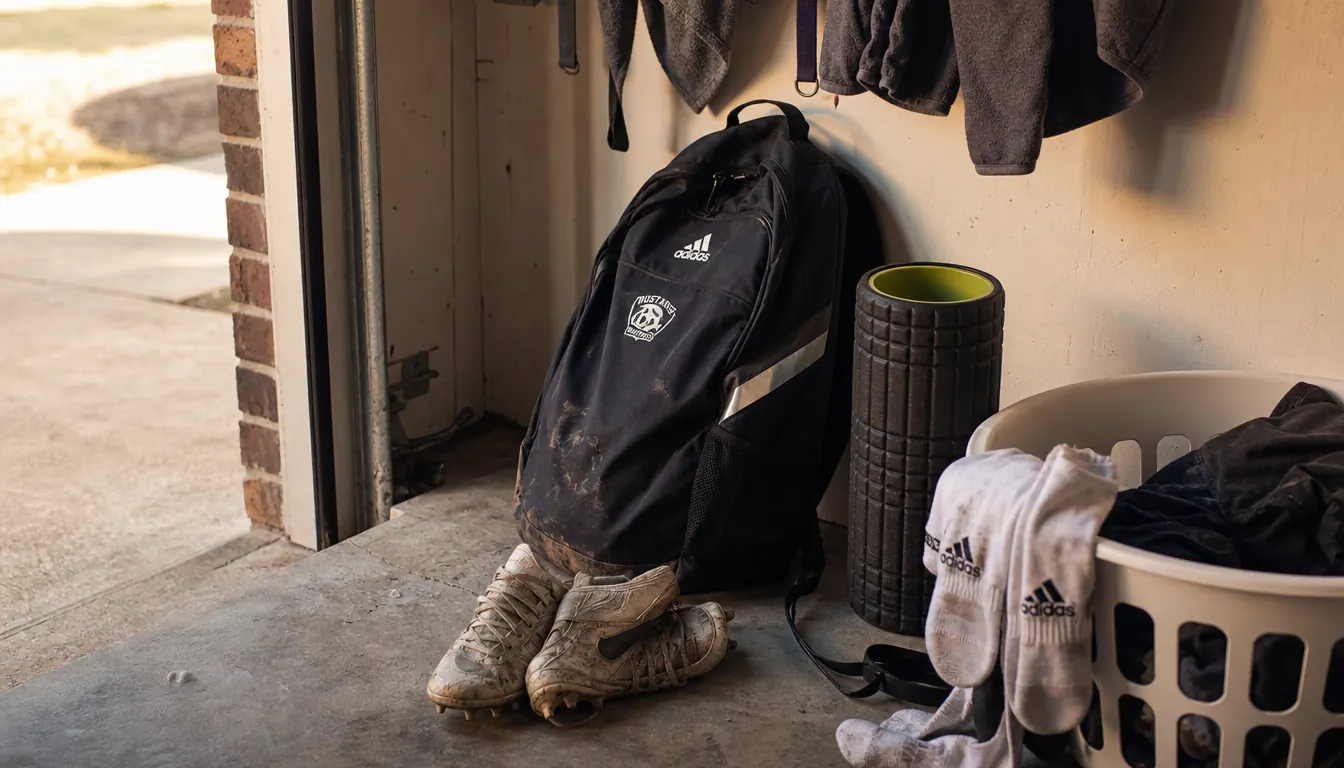
I bought the Yufree four-pair set about five months ago, in the second week of the spring season, and I have worn a pair for every Sunday league game and most Wednesday pickup games since. That is somewhere north of thirty games. Gabe is 16 and plays varsity for his high school, and he took one of the four pairs out of my bag before I could stop him. So three pairs are mine, one lives in his cleat bag, and neither of us has been careful with them. They ride around in the back of my work truck all week in a black backpack-style gear bag, which in a San Antonio summer is not a kind place for fabric.
I wear them the way most players end up wearing grip socks: underneath the team sock. I cut the feet out of an old pair of club socks and pull the tube on over the grip socks so I still match everyone else. Nobody has ever noticed, including two referees and a guy on our team who comments on everything. My Sunday games are 90 minutes on grass in Texas heat, usually with a 9 a.m. kickoff so the dew is still on the field for the first twenty minutes. My Wednesday games are shorter and much harder on the feet, because turf gives you nothing back. Wednesday is where I did my real deciding. The first night I wore them, we played on the far turf field, the one with the older surface and the seams that have been patched twice. I made a hard cut in the first ten minutes, felt the cleat come with me instead of lagging, and did not think about my feet again for the rest of the night.
Laundry is the part I actually tested, since that is where most gear quietly dies. They go in the machine with the rest of my training gear and then get hung over the edge of the laundry basket in the garage to air dry. I have not put them in the dryer and I would not. Marisol has washed them with towels by accident at least twice and they came out fine, which tells you something. What it tells you is that the fabric is not fragile. I have had training shirts that pilled after a month of that kind of treatment. These have not pilled at all.
What the Grip Actually Does Inside a Cleat
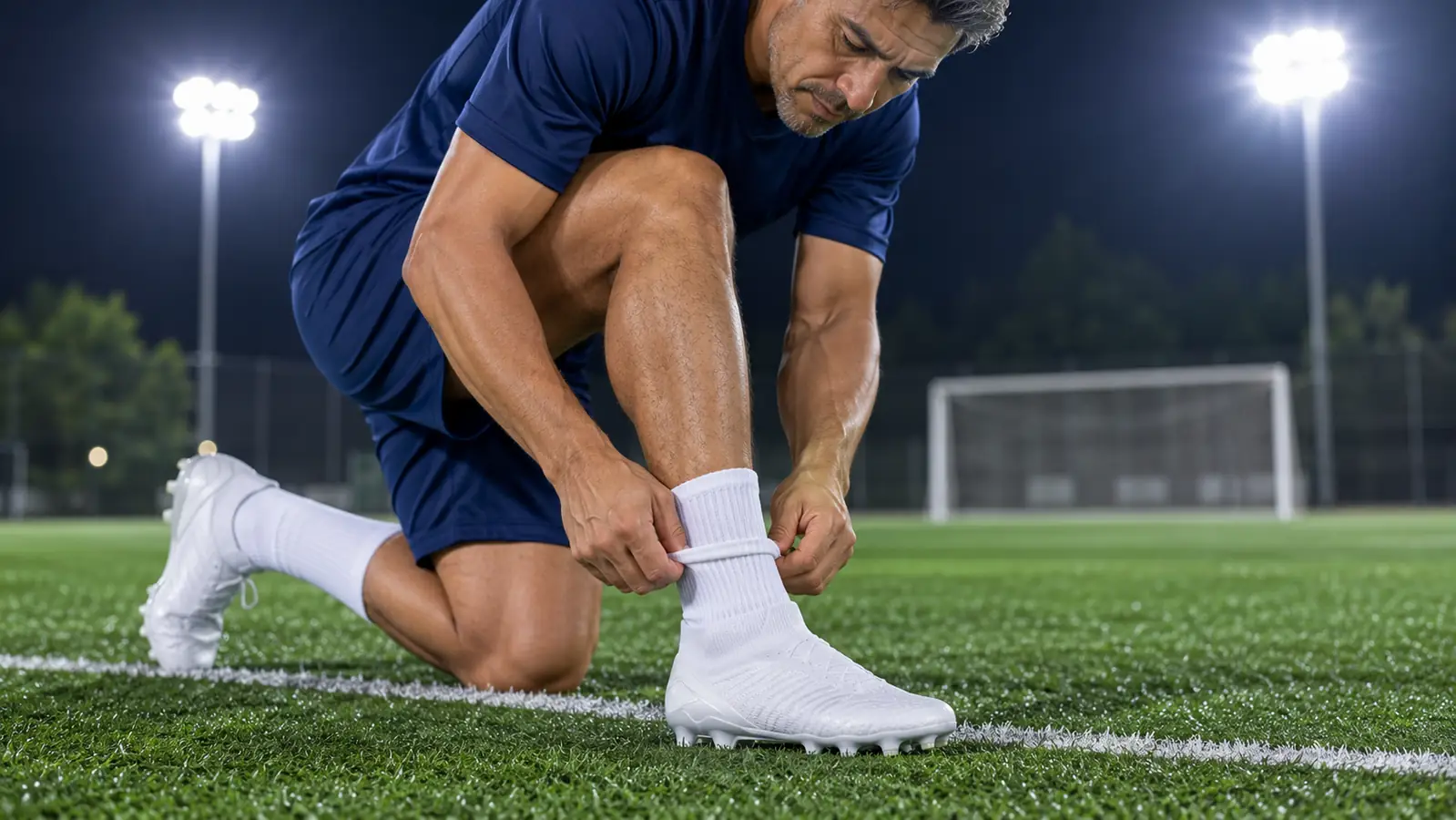
The grip is a set of rubber pads on the sole of the sock. That is the entire idea and there is nothing complicated about it. The pads press against the footbed of your cleat, the fabric wraps your foot, and the two surfaces stop moving independently. The first game I wore them, the thing I noticed was not that my foot felt glued. It was that I stopped thinking about my feet at all. That sounds small until you remember how much of the previous two seasons I spent adjusting, flexing, and quietly readjusting inside my shoe between plays. There is a specific kind of tired that comes from gripping with your toes for ninety minutes, and I had been calling it calf fatigue for two years.
Where it shows up most for me is the turf on Wednesday. Grass forgives a lot. You can dig in, the surface gives, and even a sliding sock does not cost you much. Turf does not forgive. Change direction on turf with a loose foot inside the shoe and you feel the whole cleat rotate around your foot, which is a miserable sensation at 48 with an ankle that has opinions. With the grip socks on, the cleat and the foot turn together. I cut, and the shoe comes with me instead of lagging a half step behind. I am not going to pretend I got faster. What I got was less hesitation. I stopped bracing before I turned, which is a thing you do without noticing until you stop doing it.
What they do not do is fix a cleat that does not fit. If your shoe is a half size too big, no sock is going to save you and I would sort the shoe out first. They also will not help if your cleat is worn smooth on the bottom. The sock is the interface between your foot and the shoe. It can only be as good as the shoe it is sitting in. I tested that by accident in April, when I wore the grip socks in an old backup pair of cleats I keep in the truck. The studs on those are rounded off. The sliding came right back, and it came back in the first five minutes, which settled the question.
Five Months In: What Held Up and What Didn't
Here is the honest accounting. The fabric has held up better than I expected. No holes, no thin spots at the heel, no elastic giving out at the cuff, and no pilling where the team sock rubs over the top. The grip pads are a different story. On the pair I have worn almost exclusively on turf, the pads under the ball of my foot have smoothed out noticeably. They still work. They do not bite the way they did in week two. If I had to guess, that pair has another season of Wednesday nights in it before I retire it to yard work. The pair I wear on Sundays on grass looks almost new, which tells you where the wear comes from. Turf is sandpaper.
Gabe's pair has had a harder life than mine. He trains five days a week and his mother runs a tighter laundry schedule than I do, so his have been through the machine far more often. His report, delivered with the enthusiasm of a teenager who has been asked a direct question, was that they still grip and they still fit. He has not had a blister since he started wearing them, which is more than he could say about the fall. Take that for what it is worth coming from a 16-year-old who would rather not talk about socks.
The tradeoff is that you are wearing two socks. In August in San Antonio, that matters. These are light and thin, but they are still a layer, and under a team sock on a 95 degree morning my feet run warmer than they did in a single sock. I noticed it for the first two weeks and then I stopped noticing it. If you run hot, expect an adjustment period in the summer months. What helped was switching to the thinner of the two club socks I own. The difference was immediate. That is not a knock on the grip socks. It is an honest note about wearing two layers in a place where the air is soup.
Fit, Fabric, and the Laundry Test
The blend is 56% nylon, 34% cotton and 10% elastane, listed as a lightweight fabric with medium stretch, and the fit runs true to size. I wear a 10.5 cleat and the size I ordered matched up with no guessing, no returns, no second order. They pull on, they sit at mid-calf on me, and the cuff stays where I put it for the full 90. The medium stretch matters more than it sounds like it should. A sock that stretches too easily bunches under the arch, and a sock that does not stretch enough fights you every time you pull it on over a sweaty foot at halftime.
Machine wash, and mine have been through it dozens of times. What I have not done is dry them on high heat, because elastane and a hot dryer are not friends and I would like these to last more than one season. Hung over the laundry basket in the garage overnight, they are dry by morning. Not one of the three pairs I use has shrunk, twisted, or lost its shape at the cuff. That is a low bar and plenty of gear fails to clear it. The one thing I would say is to wash them inside out if there is anything fluffy in the load, because the pads will collect lint and hold it until you pick it off.
Where They Help and Where They Don't
I want to be clear about what these are, because I have read enough gear writing that promised a sock would change a career. The Yufree grip socks stop my foot sliding inside my cleat. That is the job and they do it. They are not a brace. They are not compression. They are not doing anything for my right ankle that my lace-up support is already doing. My shin guards protect my shins, the ankle support handles the ankle, the calf sleeves handle the calves, and the grip socks handle the sliding. Four separate jobs that do not overlap, and mixing them up is how people end up disappointed in gear that was never asked to do the thing they wanted.
What changed for me is smaller and more real than a claim. I stopped adjusting my foot between plays. I stopped finishing Wednesday games with my toes cramped from gripping the inside of my cleat. My calves felt less wrecked on Thursday mornings, and my honest read on that is that I was working less hard to stay stable, not that a sock did something to a muscle. If something actually hurts, that is a conversation with a doctor or a physical therapist. It is not a conversation with a sock, and I would not let anyone tell you otherwise, including me.
I stopped finishing Wednesday games with my toes cramped from gripping the inside of my cleat. That was the entire thing I wanted fixed.
What I Liked
- Rubber grip pads on the sole stop the foot sliding inside the cleat, and it is most noticeable on artificial turf
- Fabric held up through five months of weekly games and regular machine washing with no holes or thin spots
- Runs true to size with medium stretch, so they pull on without bunching under the arch
- Four pairs in the set, which covers a full week of games without a mid-week wash
- Wear fine under a team sock with the feet cut out of the outer sock
Where It Falls Short
- Grip pads under the forefoot smooth out after a few months of steady turf use
- Two layers of sock in summer heat takes a couple of weeks to get used to
- Will not rescue a cleat that is the wrong size or worn smooth on the bottom
Who This Is For
This is for the player whose foot moves inside the cleat. If you have ever felt the shoe rotate around your foot on a turn, or finished a game with your toes sore from gripping, this is the cheapest thing to try before you go buy new cleats. It is for the turf player in particular, because turf gives you nothing to dig into and that is where the sliding is worst. It is also for the parent buying for a kid who trains most days, since a four pack covers the whole week without a mid-week emergency wash. And it is for the player in his forties who is not getting faster and would like to at least stay planted.
Who Should Skip It
Skip it if your cleats fit badly. A half size wrong is a shoe problem and a sock will not hide it. Skip it if you already have a sock you like and your foot does not move inside the shoe, because there is nothing here you are missing. Skip it if you are expecting a compression sock or anything that supports a joint, since that is not what this is, and if you have an ankle that needs real support, go see someone who knows what they are looking at rather than buying a sock and hoping. And skip it if you play once a month on grass on a cool morning, because a regular sock is probably fine and you will not notice the difference.
The fix I found for a foot that slides in the cleat
Three of my four Yufree pairs are still in the bag five months in, washed weekly, no holes. If sliding is your problem, this is where I would spend first.
Amazon Check Today's Price on Amazon →